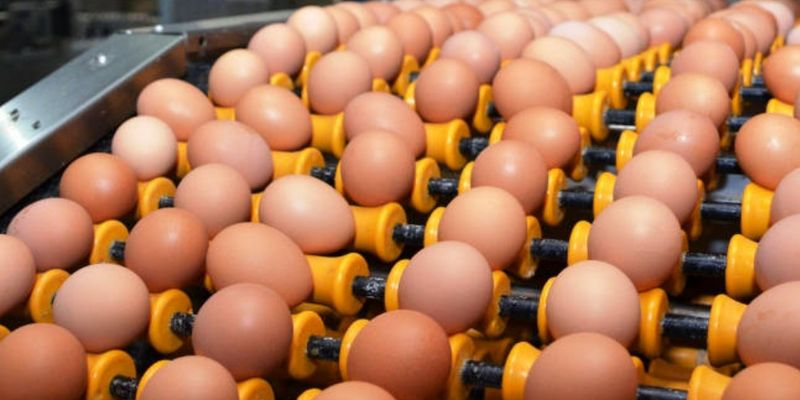
There is a moment, familiar to every restaurant owner and food manufacturer, when they realise that their entire operation hinges on finding the right chicken egg supplier. It happens quietly, usually after a delivery arrives late, or short, or wrong. The eggs are cracked. The grade is inconsistent. The yolk colour bears no resemblance to what was agreed. At that point, the search for a better supplier begins in earnest, and it turns out to be more complicated than expected.
Starting With the Basics
Eggs are deceptively simple objects. They are oval, they are fragile, and they are perishable. What makes one supplier of chicken eggs better than another is not immediately obvious to the untrained eye. But spend time with the people who buy eggs at volume and a picture begins to emerge. Consistency is everything. Not just the consistency of the egg itself, but the consistency of the supply, the delivery, the communication, and the relationship.
A bakery that produces five hundred loaves a day cannot afford to receive a different egg size from week to week. A hotel kitchen serving buffet breakfasts to two hundred guests cannot manage a supplier who shows up two hours late without notice. The product and the service are inseparable.
What Buyers Are Actually Evaluating
When a purchasing manager sits down to assess a chicken egg supplier, they are not simply looking at price per tray. Price matters, but it is rarely the deciding factor among serious buyers. The evaluation runs deeper than that.
Here is what experienced buyers typically examine:
- Farm sourcing
Where do the eggs come from, and can the supplier prove it? Traceability has become a non-negotiable requirement in professional kitchens and food manufacturing environments
- Grading accuracy
Are the eggs consistently sorted by size and interior quality, or do buyers find Grade B eggs mixed into Grade A trays?
- Shell condition
Cracked eggs are not merely a waste. They are a food safety liability, as bacteria can enter through even hairline fractures
- Cold chain management
From farm to delivery vehicle to warehouse, the temperature history of an egg affects its shelf life and safety
- Responsiveness
How quickly does the supplier communicate about shortages, price changes, or delivery adjustments?
One food procurement manager in Singapore put it plainly: “The price conversation is easy. The harder conversation is about what happens when something goes wrong. That is where you find out what a supplier is actually worth.”
The Singapore Context
Singapore occupies an unusual position in global egg supply. The country produces only a fraction of what it consumes domestically. The rest arrives primarily from Malaysia and Thailand, with growing volumes coming from further afield, including Australia and Japan. This dependence on imports means that every chicken egg supplier operating in Singapore is also, in some sense, a risk manager.
The Singapore Food Agency licenses all egg importers and sets the standards that govern how eggs are handled, stored, and sold. These regulations exist for good reason. In a densely populated city-state with a sophisticated food service industry, the consequences of a contaminated or poorly managed egg supply can ripple outward quickly.
In response to supply chain vulnerabilities exposed in recent years, Singapore has actively diversified its sources. Local egg farms, while small in scale, have grown in strategic importance. A well-positioned egg supplier in Singapore today maintains relationships with multiple farms across different countries, building redundancy into their sourcing model so that no single disruption can empty their shelves.
As one logistics coordinator in the local food trade noted: “The suppliers who survived the difficult periods were the ones who had backup arrangements already in place. They did not scramble. They made calls and adjusted.”
How the Decision Gets Made
The process of choosing a chicken egg supplier rarely happens in a single meeting. It unfolds over time, through a sequence of practical tests and gradual trust-building.
Most buyers follow a recognisable pattern:
- Begin with a trial order, typically a small volume, to assess egg quality and delivery accuracy
- Run the trial supplier alongside an existing source for several weeks to compare performance directly
- Evaluate communication during any issues that arise during the trial period
- Check certifications and any available audit records from the supplier’s storage and transport operations
- Speak informally with other buyers in their network who have dealt with the supplier
This last step is more common than it might appear. The food industry in Singapore is not large, and reputation travels quickly. A chicken egg supplier who handles a complaint well is remembered. One who argues, delays, or dismisses the problem is remembered just as clearly.
The Relationship Over Time
There is a tendency to think of supply chain decisions as purely transactional. Choose the best price, place the order, repeat. But the buyers who report the most stable and satisfying supplier relationships describe something different. They describe a degree of mutual investment, where the supplier understands the buyer’s business well enough to anticipate needs, and where the buyer stays loyal through minor price fluctuations rather than jumping to the cheapest alternative every quarter.
This kind of relationship takes time to build. It requires honesty from both sides about expectations, constraints, and capabilities. It is not romantic. It is practical. But it produces something valuable: a supply chain that holds together when conditions get difficult.
The decision about which chicken egg supplier to rely on is, in the end, a decision about how seriously a business takes the quality and continuity of everything it produces.
 Nibblish
Leave a comment